
by Cedar Point Realty | Feb 4, 2025 | Affordability, Buying Tips, First-Time Buyers, For Buyers
Buying a home is an exciting journey, but it can also feel overwhelming at times. With so many steps involved, it’s easy to feel uncertain about where to start. Fortunately, there are two essential resources that can make the process much smoother, helping you find and secure your ideal home faster. Here’s how a knowledgeable real estate agent and a mortgage pre-approval can set you up for success:
1. A Knowledgeable Real Estate Agent
One of the most valuable resources in your home-buying journey is a professional real estate agent. A good agent brings local expertise and market insight to the table, and they can guide you through every step of the process, from searching for homes to closing the deal. Here’s how a real estate agent can help:
- Expert Market Insight: Real estate agents are immersed in the local market and can give you an insider’s view of neighborhoods, pricing trends, and which homes are worth checking out. They’re also in the know about upcoming listings, often having access to properties before they hit the public market.
- Negotiation Power: An experienced agent can be an invaluable asset when it comes to negotiations. They can help you craft a competitive offer, negotiate with sellers, and ensure you’re getting a fair deal, even in a hot market.
- Access to Listings: Through the Multiple Listing Service (MLS), real estate agents can provide access to listings that may not be available on popular real estate websites. This gives you an edge in finding homes that match your criteria before they get snapped up by other buyers.
- Guidance Through the Process: From the initial search to closing day, a real estate agent handles all the logistics, including scheduling showings, reviewing contracts, and ensuring you meet all necessary deadlines. Their expertise helps to streamline the process and ease any stress along the way.
A real estate agent can save you time and effort, helping you make informed decisions and guiding you toward the best home for your needs.
2. Mortgage Pre-Approval
Before you start touring homes, it’s crucial to know how much you can afford. That’s where mortgage pre-approval comes in. Getting pre-approved for a mortgage can provide you with a competitive edge and help you avoid any surprises down the road. Here’s why mortgage pre-approval is such a powerful resource:
- Confidence in Your Budget: Getting pre-approved gives you a clear picture of how much you can borrow, so you can focus on homes within your budget. This not only saves you time but helps ensure you’re looking at properties that you can actually afford.
- Faster Closing: With your financing already lined up, the closing process can be much faster. Since your lender has already reviewed your financial documents and credit history, it streamlines the approval process when it’s time to make an offer.
- Competitive Edge: In a competitive market, being pre-approved for a mortgage is a huge advantage. Sellers are more likely to take your offer seriously because they know you’re a qualified buyer who can close quickly. This can be especially important if you’re in a bidding war with other potential buyers.
- Interest Rate Lock: When you’re pre-approved, many lenders will offer to lock in an interest rate for a certain period. This can protect you from rising rates before you close on your home, potentially saving you money in the long run.
To get pre-approved, you’ll need to provide some basic financial information, such as proof of income, credit history, and any outstanding debts. It’s an important step in the home-buying process and gives you a clear idea of what you can afford.
Conclusion
Navigating the home-buying process can be complex, but using the right resources can make it much easier. By partnering with a knowledgeable real estate agent and securing mortgage pre-approval, you’ll be well-positioned to find your ideal home and negotiate a great deal. These two resources not only help you save time but also give you the confidence and clarity to make informed decisions, bringing you one step closer to homeownership.
So, if you’re ready to start your home-buying journey, consider reaching out to an experienced real estate agent and getting pre-approved for a mortgage. With the right tools in hand, you’ll be on your way to making your dream home a reality—sooner rather than later!

by Cedar Point Realty | Jan 14, 2025 | Affordability, Buying Tips, For Buyers
Buying a home is one of the biggest decisions many of us will ever make. Among the various options available, the “fixer-upper” is a popular choice for those looking to put their personal stamp on a property and potentially save on initial purchase costs. But is a fixer-upper the right choice for you? Before diving in, it’s essential to evaluate your budget, time, skills, and emotional resilience. Here are key factors to consider when determining whether a fixer-upper fits your needs and lifestyle.
1. Budget and Financial Flexibility
A primary advantage of purchasing a fixer-upper is the lower upfront cost compared to move-in-ready homes. However, while the purchase price may be cheaper, renovations can add up quickly. It’s essential to have a clear understanding of your budget and whether you can afford both the house and the renovation costs.
- Upfront Costs: Make sure you account for not only the cost of the home but also any immediate repairs or upgrades that may be needed before you can live in the property comfortably.
- Hidden Costs: Many fixer-uppers hide potential issues such as outdated plumbing, electrical problems, or structural damage. Always budget for these potential surprises, and consider getting a thorough home inspection before committing to a purchase.
- Financing Renovations: If you plan to finance the renovations, investigate renovation loans such as FHA 203(k) loans or HomeStyle Renovation loans that can help cover the cost of repairs.
2. Time Commitment
Renovating a fixer-upper is often a long-term project. If you need a home ready to move in right away, a fixer-upper may not be the best option. Consider how much time you can realistically devote to the renovations.
- DIY Projects: If you’re planning on doing the work yourself, be honest with yourself about your available time and skill level. Renovations often take longer than anticipated, and DIY projects can lead to setbacks, delays, and added stress.
- Professional Help: If you intend to hire contractors, keep in mind that it may take time to get estimates, schedule work, and wait for contractors to finish their jobs. Delays and unforeseen challenges can push back your timeline.
3. Skill and Experience
Not everyone is equipped to handle the extensive work required to renovate a home. If you’re comfortable with DIY projects and have some experience with home improvement, a fixer-upper may be a rewarding challenge.
- Assess Your Skills: Be honest with yourself about your abilities. Renovating a fixer-upper can involve everything from replacing flooring and painting walls to rewiring electrical systems or fixing plumbing. If you’re not confident in certain areas, it’s best to hire professionals.
- Know When to Call in Experts: Some repairs—particularly those involving electricity, plumbing, or structural integrity—require professional expertise. These can be costly but are necessary to ensure your safety and the home’s long-term value.
4. Risk Tolerance
Renovations can be risky. There are often unexpected challenges that arise once you start tearing down walls or discovering hidden problems behind cabinets and under floors.
- Unexpected Costs: Hidden mold, foundation issues, or outdated HVAC systems can significantly increase renovation costs. Always have a contingency fund set aside for unforeseen issues.
- Stress and Frustration: Renovation projects are rarely smooth sailing. There can be setbacks, delays, and stress along the way. If you’re someone who prefers a more predictable, hassle-free process, a fixer-upper might not be for you.
5. Living Situation
If you’re planning to live in the home during renovations, it’s important to assess whether you can handle the disruption.
- Move-In Ready vs. Work in Progress: Some people are comfortable living in a house while it’s being renovated, but others prefer to wait until the work is finished. If you need a home that’s immediately habitable, a fixer-upper may not fit your needs.
- Temporary Housing: If you can’t live in the home while it’s being renovated, you’ll need to factor in the cost and logistics of temporary housing. This could be additional rent or staying with family or friends, which can add to the overall cost and stress.
6. Long-Term Value
A well-renovated fixer-upper can be a great investment. With careful planning and execution, you can increase the value of the home significantly. However, it’s important to consider the long-term potential.
- Neighborhood and Market Conditions: Assess the neighborhood to ensure that the home’s value will rise after renovations. Renovating a fixer-upper in a location where property values are stagnant or declining may not offer the return on investment you’re hoping for.
- Resale Value: If you plan to sell the home in the future, consider how your renovations will affect the resale value. Make sure the improvements align with buyer preferences and the local market trends.
7. Emotional Resilience
Renovating a fixer-upper isn’t just about money and time—it can also be an emotional rollercoaster. You may experience excitement, frustration, and stress, especially if things don’t go according to plan.
- Patience and Perseverance: Home renovations can test your patience. If you thrive under pressure, have a positive mindset, and can handle setbacks, a fixer-upper could be a fulfilling challenge.
- Long-Term Satisfaction: Successfully completing a fixer-upper can bring immense satisfaction. The process allows you to put your personal touch on the property, but it also requires a level of emotional endurance.
Conclusion
A fixer-upper can be an excellent opportunity to create your dream home and build equity. However, it’s not for everyone. If you have the financial flexibility, time, skills, and patience to handle the renovations, it can be a rewarding experience. On the other hand, if you’re looking for a move-in ready home without the headache of constant repairs, you may want to explore other options. Carefully weigh the pros and cons to determine whether a fixer-upper is the right choice for you.

by Cedar Point Realty | Dec 12, 2024 | Affordability
In today’s world, many people are feeling the strain of high living costs, especially in large urban centers. With rising housing prices, escalating utility bills, and general inflation, it’s no surprise that people are starting to consider moving to more affordable areas. While this might seem like a daunting decision, relocating to a less expensive region can bring numerous financial, personal, and long-term benefits. Here’s why moving to a more affordable area makes sense for many individuals and families.
1. Lower Living Costs
One of the most immediate and obvious advantages of moving to an affordable area is the reduction in living costs. The expenses associated with housing are often the largest part of anyone’s budget, and in high-cost cities, they can be a significant burden. By relocating to an area where rent or home prices are lower, you can drastically reduce your monthly housing payments, freeing up money for other things, like savings or leisure activities.
But housing isn’t the only area where costs can be reduced. Utility bills, property taxes, and even grocery prices can be more affordable in smaller towns or suburban areas. In many cases, even healthcare and general services like car maintenance can be less expensive in more affordable locations.
2. Increased Savings and Financial Flexibility
Lower living expenses mean more disposable income. With the money saved from reduced housing and everyday costs, you can redirect those funds toward building your savings, investing for retirement, or paying off existing debts. Living in an affordable area offers more financial flexibility, making it easier to take advantage of opportunities, whether it’s for a vacation, further education, or simply enhancing your standard of living.
With the freedom from high monthly payments, you also have more room to focus on long-term goals, whether it’s saving for a down payment on a house or starting an emergency fund. The sense of financial security that comes from living within your means can be incredibly empowering.
3. Improved Quality of Life
In addition to financial benefits, moving to a more affordable area can significantly improve your overall quality of life. The constant pressure of high living expenses can be stressful, but when you move to an area with lower costs, that stress is often alleviated. The peace of mind that comes from knowing you can meet your financial obligations more easily creates space for relaxation and personal growth.
A lower cost of living can also mean better work-life balance. Many affordable areas have a slower pace of life, which allows for more free time to enjoy family activities, hobbies, or simply relax. If you’re a fan of nature, rural or suburban areas often offer access to outdoor activities and a calmer, more enjoyable environment, far from the hustle and bustle of big cities.
4. More Space and Comfort
Living in a more affordable area often means getting more space for your money. In urban areas, small apartments or houses can come with hefty price tags, but in more affordable locations, you might find yourself with a larger home or more land at a fraction of the cost. Whether it’s a spacious house with a yard for your family or an affordable apartment with extra room for storage, a larger living space can significantly enhance your comfort.
Additionally, many affordable areas offer the opportunity to live in a quieter neighborhood, which can be especially beneficial for families with children or those seeking a peaceful environment.
5. Better Opportunities for Financial Freedom
Moving to a more affordable area can speed up your journey to financial freedom. With lower costs and more savings potential, you can pay off debt faster, reduce financial stress, and create a stronger foundation for your future. Many people find that living in a less expensive area allows them to focus on long-term wealth-building strategies, like investing or starting a business, without the constant pressure of trying to cover high living expenses.
Moreover, the reduced cost of living means that you may not need to earn as much to meet your basic needs, giving you more options to take on jobs that align with your interests, take career risks, or transition into a different industry without the fear of living paycheck to paycheck.
6. Fewer Financial Setbacks and Greater Resilience
Life is unpredictable, and financial setbacks—such as losing a job or dealing with an unexpected health issue—are inevitable. Living in a less expensive area can provide a cushion against these uncertainties. The smaller your living expenses, the less you need to maintain your lifestyle, which makes it easier to handle unexpected challenges.
In a city with high costs, you may find it much harder to recover from financial setbacks, but in more affordable regions, your savings can go further, providing you with a stronger financial safety net during tough times.
7. Potential for Homeownership
Owning a home is a common goal for many individuals and families, but in high-cost areas, it can feel impossible. By moving to a more affordable location, homeownership may become more attainable. In cities where the median home price is astronomical, you might find that your monthly payments for a house in a more affordable area are much more manageable.
In addition, homes in affordable regions may appreciate in value over time, helping you build equity and financial security. Owning a home in a less expensive area also means you can avoid high rent increases and the instability that often comes with renting in an expensive city.
8. Better Community and Lifestyle
Affordable areas often offer a stronger sense of community. Smaller towns or suburban neighborhoods tend to have tight-knit communities where people know each other, fostering a sense of belonging and support. For families, these areas often provide a safer environment for raising children, with less traffic, lower crime rates, and more opportunities for outdoor play.
In addition to the community benefits, many people who move to more affordable areas report a better quality of life due to the slower pace and reduced stress. There’s simply more time and energy to enjoy life outside of work and meet new people.
9. Long-Term Financial Stability
Moving to an affordable area isn’t just about the present; it’s also a smart move for the future. By living in a more affordable area, you can build financial stability over the long term. You have the opportunity to save, invest, and plan for your future in a way that may not be possible in a high-cost area. The financial freedom that comes with lower living costs opens up a wealth of opportunities—whether it’s securing your retirement, building generational wealth, or enjoying a more comfortable lifestyle.
Conclusion
Moving to a more affordable area is not just about cutting costs—it’s about improving your financial outlook, enhancing your quality of life, and creating a more secure future. By reducing the pressure of high living expenses, you give yourself the freedom to focus on what truly matters: building wealth, improving well-being, and enjoying life. If you’re tired of feeling financially stretched and looking for ways to improve your lifestyle, relocating to a more affordable area might just be the smart choice you need.

by Cedar Point Realty | Dec 10, 2024 | Affordability, Home Prices, Inventory
As inflation continues to strain household budgets and business costs, many are asking: what will it take to bring prices down? While rising costs are influenced by a variety of factors, several key areas could help ease inflation in the near future.
1. Supply Chain Improvements
Global supply chain disruptions, worsened by the pandemic and geopolitical tensions, have caused shortages and increased costs. Streamlining production, improving logistics, and diversifying suppliers could reduce these costs and ultimately bring prices down.
2. Government Policy Interventions
Governments can use fiscal and monetary policies to combat inflation. Central banks may raise interest rates to reduce demand, while fiscal policies like tax cuts or subsidies could lower costs for businesses and consumers. The right balance of these policies can help stabilize prices.
3. Labor Market Adjustments
If wages increase too quickly without productivity gains, businesses raise prices to compensate. A slowdown in wage growth or a cooling labor market could help reduce inflation. Additionally, increasing workforce participation could boost production capacity, helping lower costs.
4. Global Factors
Global commodity prices, such as oil and agricultural goods, greatly impact the cost of goods. If supply improves or demand drops for these commodities, prices could fall. Geopolitical stability, like the resolution of trade conflicts, would also help stabilize prices.
5. Technological Innovations
Advancements in technology, including automation and improved energy production, can reduce production costs across industries. As companies adopt these innovations, they may pass on savings to consumers through lower prices.
6. Reduced Demand
When consumer demand decreases—due to economic uncertainty or changing preferences—businesses may lower prices to attract customers. A shift in consumer spending patterns could help drive prices down.
7. Decreased Inflation Expectations
Managing inflation expectations is key. If businesses and consumers expect prices to stabilize, they may hold off on raising prices or wages, helping to slow down inflation.
8. Currency Stabilization
A stronger currency reduces the cost of imports, which can lower prices for consumers. If a country’s currency appreciates, it may help ease inflationary pressures.
Conclusion
Bringing prices down is complex and requires action across multiple areas, including supply chain improvements, policy changes, and technological advancements. While the timing and success of these efforts are uncertain, a combination of these factors can help ease inflation and provide relief to consumers and businesses alike.

by Cedar Point Realty | Nov 4, 2024 | Affordability, Buying Tips, For Buyers
Looking to buy a home but feeling like almost everything is out of reach? Here’s the thing. There’s still a way to become a homeowner, even when affordability seems like a huge roadblock – and it might be with a fixer upper. Let’s dive into why buying a fixer upper could be your ticket to homeownership and how you can make it work.
What Is a Fixer Upper?
A fixer upper is a home that’s in livable condition but needs some work. The amount of work varies by home – some may need cosmetic updates like wallpaper removal and new flooring, while others might require more extensive repairs like replacing a roof or updating plumbing.
Because they need some elbow grease, these homes typically have a lower price point, based on local market value. In fact, a survey from StorageCafe explains that fixer uppers generally cost about 29% less than move-in-ready homes.
And that’s why, according to a recent survey, more buyers are considering homes that need a little extra work right now (see below):
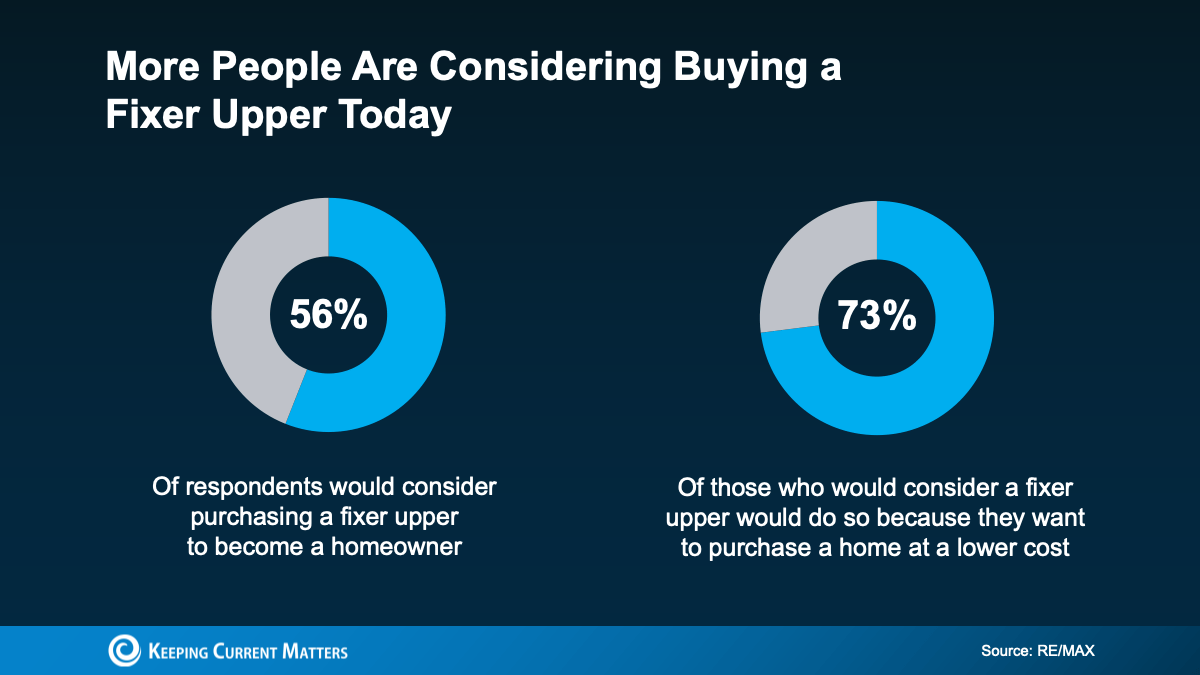 If you’re looking for an option to get your foot in the door, and you’re willing to roll up your sleeves and do a bit of work, a house with untapped potential may be a good option.
Tips for Buying a Home That Needs Some Work
Before you buy a home that may need a makeover, here are a few things to keep in mind:
- Choose a Good Location: You can repair a house, but you can’t change where it is. Make sure the home is in a neighborhood you like or one with increasing property values and a growing number of local amenities. This way, even after you spend money fixing it up, the house will be worth more later.
- Budget for Surprises: Fixing up a house can take more time and money than you might think. Make sure you save room in your budget for unexpected repairs or other unknowns that might come up while you’re working on the house.
- Get a Home Inspection: Before you buy, hire an inspector to check out the house. They’ll help you determine the necessary repairs, so you don’t end up with expensive surprises later.
- Plan Your Priorities: When deciding what to tackle first, it helps to categorize your goals. Think of your home in three ways: the must-haves (essential repairs), the nice-to-haves (upgrades that would make life easier), and the dream-state features (luxuries you can add later). This will help you prioritize and stick to your budget.
Remember, the perfect home is the one you perfect after buying it. By starting with a fixer upper, you have the opportunity to customize a home to your liking while saving money on the initial purchase price. With careful planning, budgeting, and a little bit of vision, you can turn a house that needs some love into your perfect home.
Real estate agents are great at finding homes with potential. They know the local market and can guide you to homes where smart upgrades can add value. With their help, you’re more likely to find a house that fits your total budget and has room for worthwhile improvements.
Bottom Line
In today’s market, where the cost of homeownership can be intimidating, finding a move-in-ready home that fits your budget can feel like a real challenge. But if you’re open to putting in a little work, you can transform a fixer upper into your ideal home over time. A local real estate agent can help you explore what’s possible and find a place that’ll work for you.

by Cedar Point Realty | Oct 28, 2024 | Affordability, For Buyers, Inventory
Even though there are more homes available for sale than there were at this time last year, there are still more buyers than there are houses to choose from. So, know that if you’ve got moving on your mind, your house can really stand out.
There are several key reasons why there aren’t enough homes to go around and understanding them will help you see why the market is working in your favor if you’re ready to make a move.
What’s Causing the Shortage?
1. Underproduction of Homes: For years, the industry hasn’t built enough homes to keep up with demand. As Zillow explains:
“In 2022, 1.4 million homes were built — at the time, the best year for home construction since the early stages of the Great Recession. However, the number of U.S. families increased by 1.8 million that year, meaning the country did not even build enough to make a place for the new families, let alone begin chipping away at the deficit that has hampered housing affordability for more than a decade.”
2. Rising Costs: Building materials, labor shortages, and supply chain disruptions caused by the pandemic have all made it harder and more expensive to build homes. This can either limit or stop new home construction in some areas.
3. Regional Imbalances: Some markets are more affected by the shortage of homes than others. Popular and more desirable areas have more people moving in faster than new homes can be built. The number of new building permits issued doesn’t always keep pace with job growth in these regions, and that leads to even tighter markets and higher prices.
How Big Is the Problem?
According to estimates from Real Estate News, the U.S. is facing a housing shortfall of roughly 3.3 million homes, based on an average of several expert insights (see graph below):
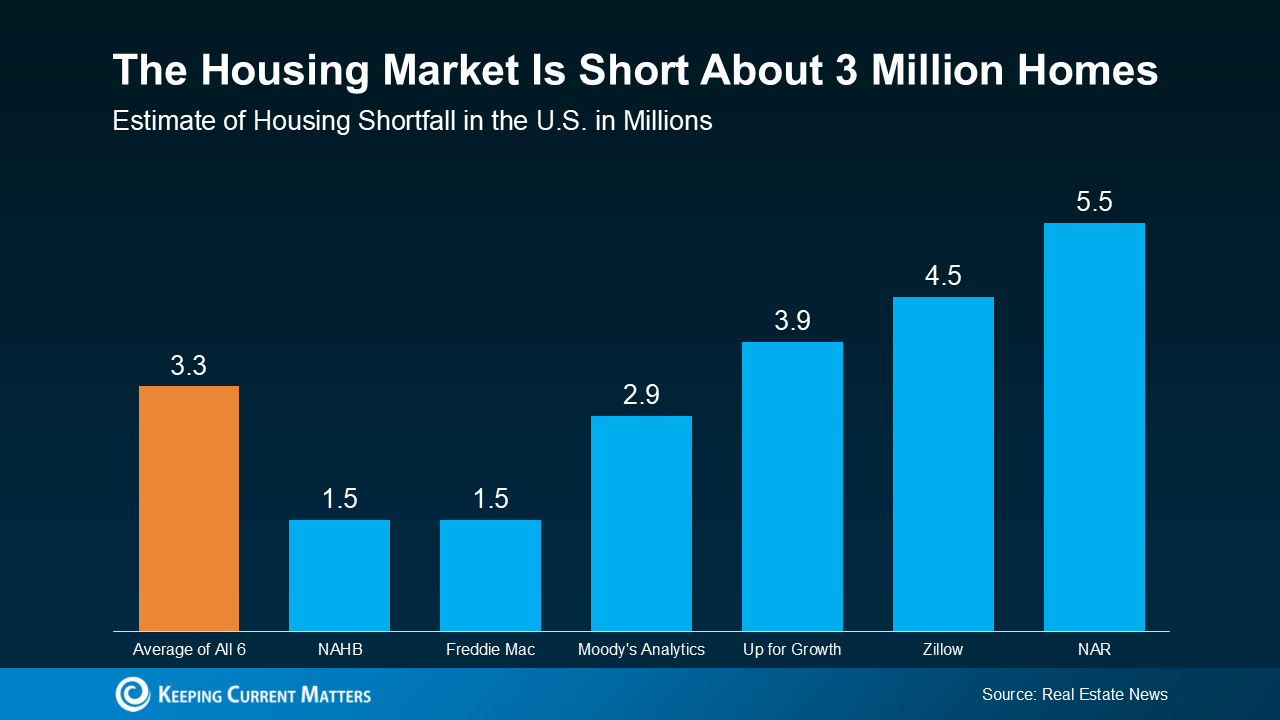 This shows there’s a significant number of homes that need to be built just to meet current demand from buyers. But what about future demand?
According to John Burns Research and Consulting (JBREC), over the next 10 years, the U.S. will need about 18 million new homes to meet projected demand, including homes for new households, second homes, and replacements for aging or unusable homes.
So, even though more homes are on the market compared to last year, there still aren’t enough of them to go around. This is where you can really win if you’re ready to sell your house.
What You Need To Remember
If you’re thinking about selling, the shortage of homes for sale means your house is likely to get some serious attention from buyers. It’ll take years to climb out of this inventory deficit, and the market is still very tight. So, when buyers are competing for relatively few homes like they are right now, that creates more interest in the houses that are on the market, putting upward pressure on prices and ultimately working in your favor.
And since every market is different, it’s important to work with a real estate agent who understands local trends. They can help you price your house right and create a strategy to attract the right buyers.
Bottom Line
While there are more homes for sale than there were at this time last year, there’s still a shortage overall. And this puts you in the driver’s seat as a seller. Reach out to a trusted real estate agent who can help you take advantage of today’s market.
